We are happy you are here!
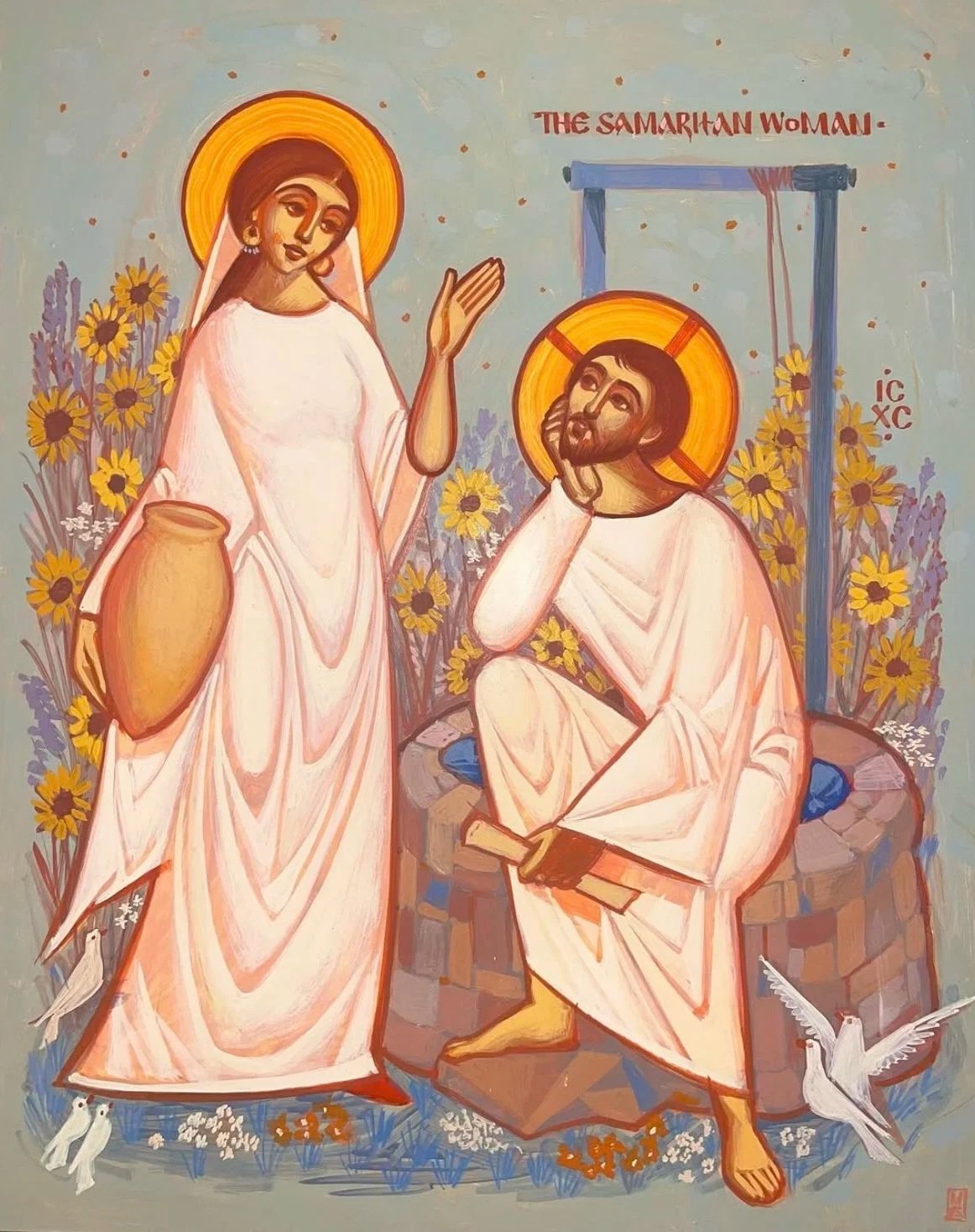

At HRC, we are a community made up of both cradle-born Orthodox Christians and those who have converted to the faith. We welcome newcomers, inquirers and visitors - anyone who wishes to discover ancient Coptic Orthodox Christianity.
Come and See
-
Incense symbolizes prayers and repentance rising to heaven. Its fragrance reminds us to lift our prayers and hearts of repentance to God.
-
We make the sign of the cross at various points in the liturgy, like when hearing words such as “worship” or “holy.” It’s a physical way to express our devotion, but there’s no strict rule for when to do it.
-
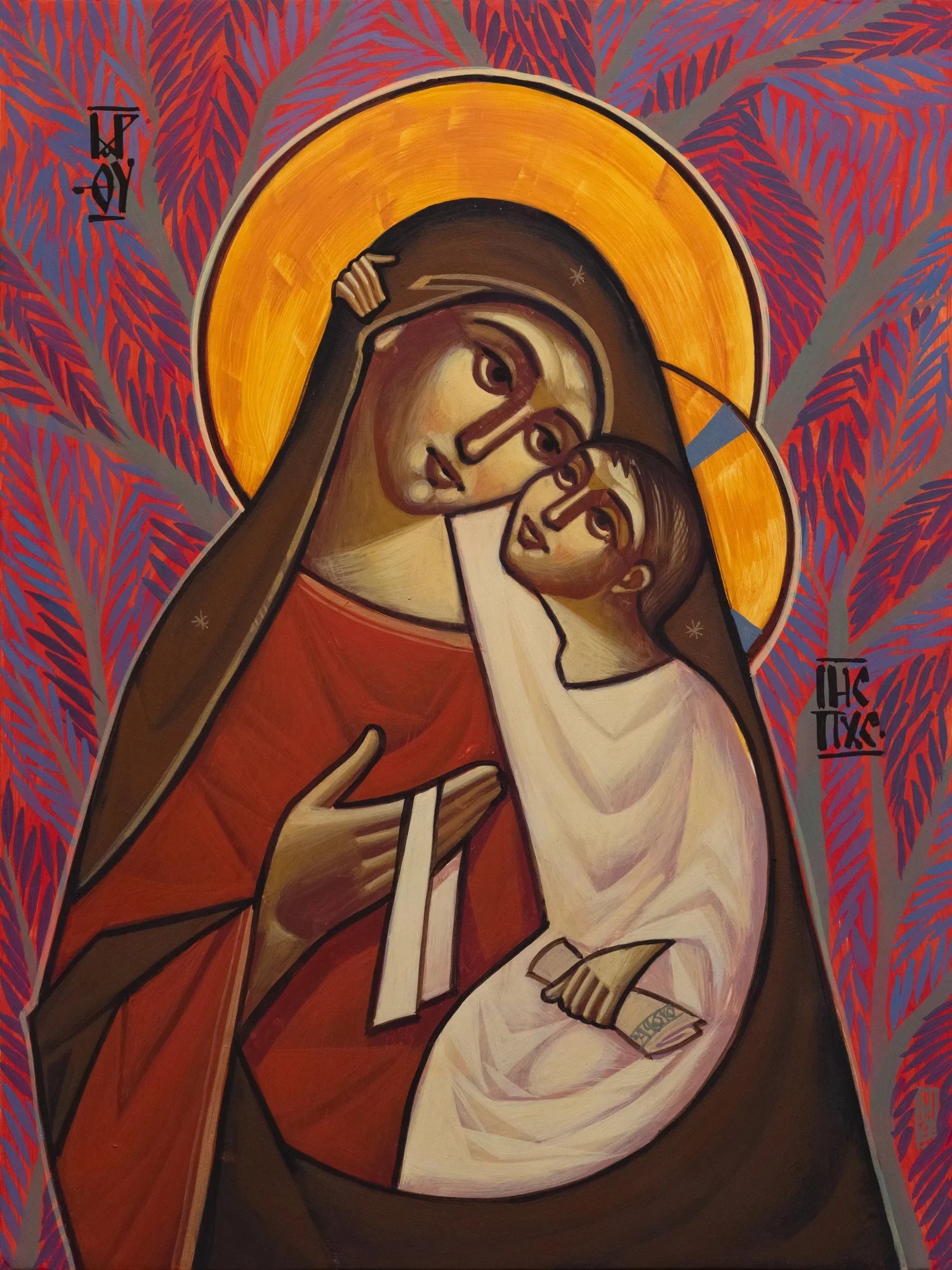
In an Orthodox church, you’ll notice icons of saints. We don’t pray to the saints themselves, but ask for their prayers (or intercessions), like asking a friend to pray for you. Though not physically present, the saints are alive and part of the Church.
-
In the Orthodox tradition, we stand for most of the service, though there are moments to sit. Don’t worry, if standing is difficult at first, it’s perfectly fine to take a seat.
-
The ancient liturgucal hymns are rich with theology and Scripture. Much of the service is sung by the congregation, and if you feel comfortable, join in! Singing along helps you stay engaged during the prayers.
-
Once the deacon says, "greet one another," we are called to exchange the kiss of peace, as an opportunity to reconcile with one another just as Christ reconciled us to Himself. Don’t worry, it’s easy! Just follow the example of those nearby.
-
You may notice people taking off their shoes in church and using head scarves, especially as they approach the Holy Communion. These gestures show reverence and humility as we worship and draw near to God.
-
At the end of the liturgy, part of the dismissal, the Priest sprinkles holy water. This symbolizes God’s blessing and serves as a reminder of our baptism and renewal in Christ.
-
After the Divine Liturgy, you may notice pieces of bread being passed out. This is not Communion, but bread that the was blessed during the beginning of Liturgy. The most perfect bread becomes the Lamb offering (Holy Communion), and the rest is cut up and shared as a sign of fellowship. The bread is round, representing that God has no beginning or end. It is also stamped with 12 crosses surrounding a large cross in the middle. This represents Christ and the 12 Disciples. Around the large cross in the center, you will find 5 holes, as a reminder of the piercing in Christs hand and foot and piercing on His side.
Our liturgy begins at 8:30AM. The Liturgy is comprised of prayers, scripture readings, Gospel readings, a sermon and Holy Communion. The Orthodox liturgy is a sensory worship experience. Throughout the liturgy, you will observe the various ways we express our worship.
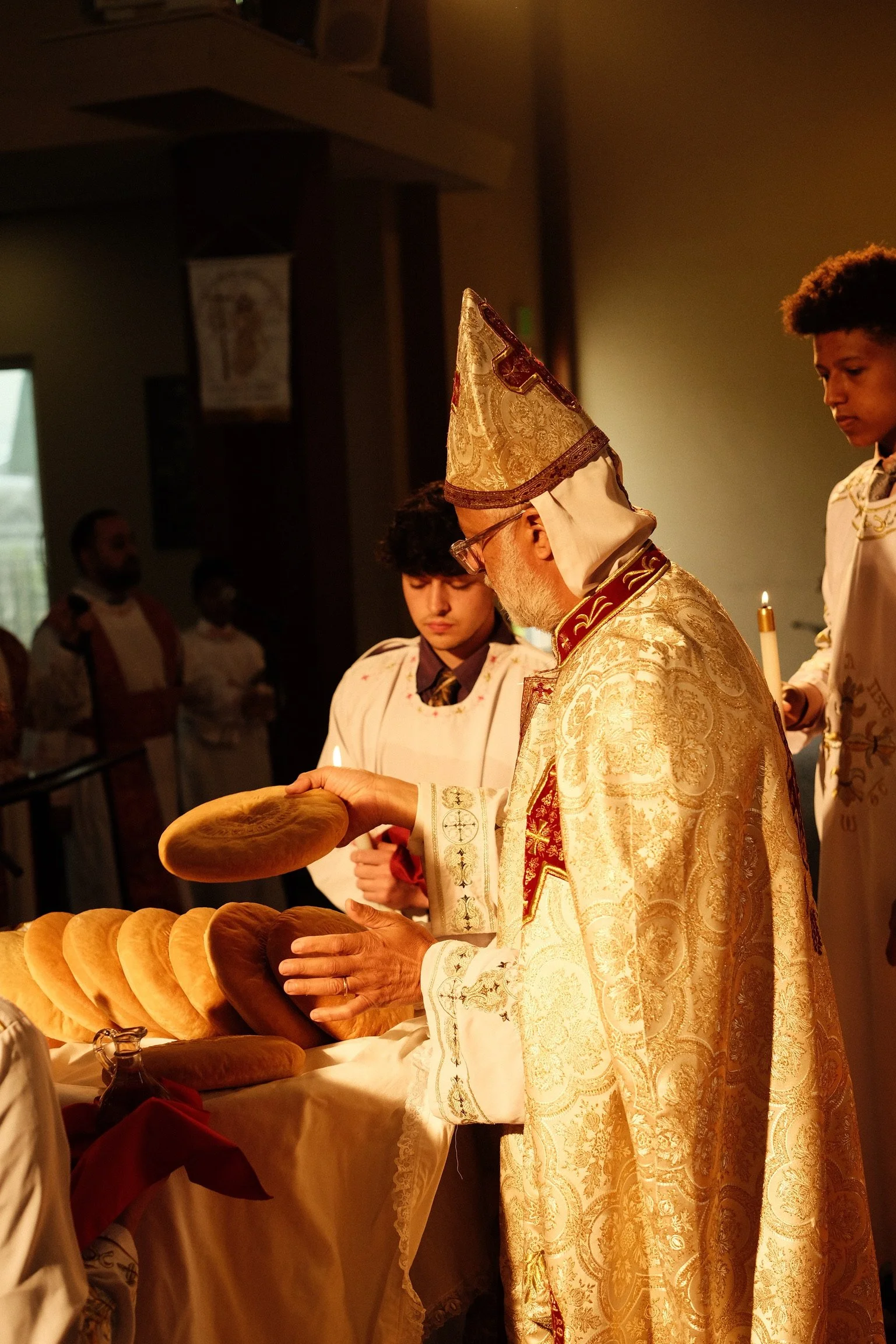
"RECOGNIZE IN THIS BREAD WHAT HUNG ON THE CROSS, AND IN THIS CHALICE WHAT FLOWED FROM HIS SIDE"
-ST. AUGUSTINE OF HIPPO
Visitor FAQs
-
The general guideline for men and women is to dress modestly and respectfully, as if standing before God.
-
Orthodox priests offer Communion only to baptized members of the canonical Oriental Orthodox Church (Coptic, Syrian, Armenian, Ethiopian, Eritrean, and Malankara) and if married, must be married in the Oriental Orthodox Church. We believe that the Holy Communion is the true and real presence of Christ. This reflects the Church’s unbroken 2,000-year Apostolic tradition.
After the completion of the Divine Liturgy, Visitors are welcome to receive the Holy Bread, participating in the fellowship of the Church without partaking of the Holy Communion itself.
-
On Saturday evenings, the Evening Raising of Incense (Vespers) service typically lasts about 30 minutes. On Sunday mornings, a similar service (Matins) is held before the Divine Liturgy. Afterwards, the Divine Liturgy is approximately two hours, which includes an English sermon. While this may seem long, participating in an Orthodox service allows you to fully engage in worship and encounter the living God.
CONNECT WITH US